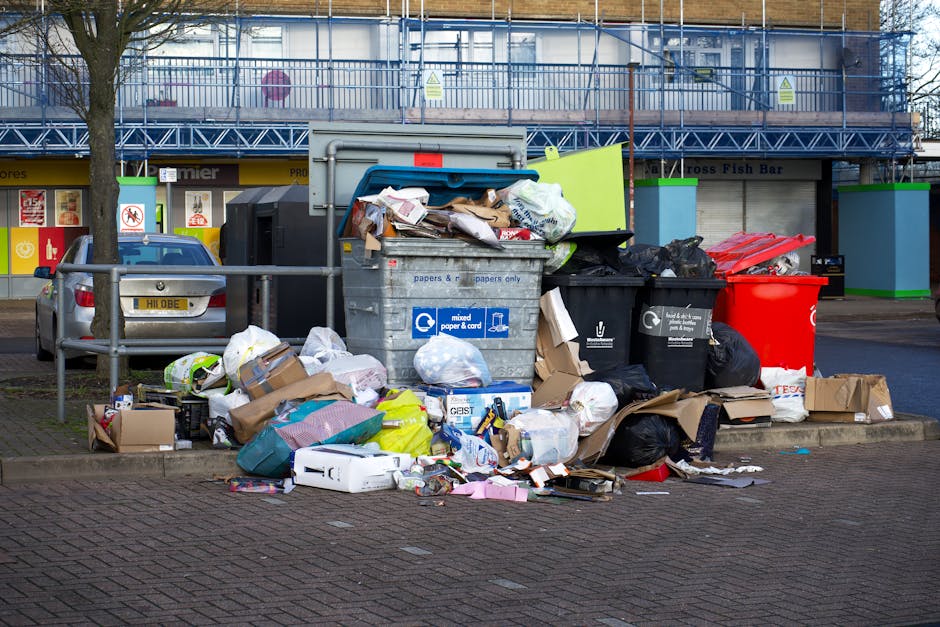
Abbey Wood Local Council Rubbish Rules: What to Know When Booking
If you're trying to book a rubbish collection in Abbey Wood, the tricky bit is usually not the booking itself - it's making sure the waste is handled in a way that fits local council rules, property access, and the type of rubbish you actually have. One loose chair is simple. A mixed load from a flat clearance, a garden tidy-up, or a builders' job? Not so simple.
This guide breaks down Abbey Wood local council rubbish rules what to know when booking in plain English. You'll see what matters before you confirm a collection, how to avoid common mistakes, what to ask a clearance company, and how to separate general waste from items that need special handling. We'll keep it practical and grounded, because let's face it, rubbish rules are rarely the fun part of the day.
Table of Contents
- Why Abbey Wood local council rubbish rules what to know when booking Matters
- How Abbey Wood local council rubbish rules what to know when booking Works
- Key Benefits and Practical Advantages
- Who This Is For and When It Makes Sense
- Step-by-Step Guidance
- Expert Tips for Better Results
- Common Mistakes to Avoid
- Tools, Resources and Recommendations
- Law, Compliance, Standards, or Best Practice
- Options, Methods, or Comparison Table
- Case Study or Real-World Example
- Practical Checklist
- Conclusion
- Frequently Asked Questions
Why Abbey Wood local council rubbish rules what to know when booking Matters
Booking waste removal sounds straightforward, but council expectations can change what you're allowed to put out, where it can be left, and how quickly it must be taken away. In Abbey Wood, that matters because many homes and flats have limited access, shared entrances, narrow stairwells, parking constraints, or communal walkways. A collection that looks easy on paper can become awkward very quickly.
Rules matter for a second reason too: they help you avoid the kind of messy overlap between household rubbish, bulky items, builders' waste, and anything classed as hazardous. If you mix them without checking, you can end up with rejected waste, extra charges, or delays. Nobody wants a pile of half-packed bags sitting in the hallway while everyone wonders who is meant to move it. Been there, seen that.
For many people, the real issue is not just compliance. It's confidence. You want to know that what you're booking is suitable for the job, the building, and the type of items you have. That's especially true if you're arranging a flat clearance, office clearance, or a one-off house clearance where the load includes a bit of everything.
A sensible booking process should make it easy to explain what you've got, what access looks like, and whether anything needs special treatment. If a company can't answer those questions clearly, that's usually a sign to pause and ask more. A calm five-minute chat can save a whole day of headache later.
How Abbey Wood local council rubbish rules what to know when booking Works
Most rubbish collections and clearances follow the same basic logic: the waste type determines the handling method, and the handling method affects the booking. That means the first step is not picking a time slot. It's identifying what you need removed.
Broadly, waste falls into a few common categories:
- General household rubbish such as bagged waste, broken small household items, and mixed non-hazardous waste.
- Bulky items like wardrobes, beds, mattresses, sofas, and appliances.
- Garden waste including branches, soil, turf, and cuttings.
- Builders' waste such as rubble, plasterboard, tiles, timber offcuts, and packaging from renovation work.
- Special or hazardous waste which needs extra care and often separate handling.
When booking, the company will normally need enough detail to estimate labour, loading time, vehicle space, and disposal costs. A small mixed load may be priced very differently from a heavy builders' load, even if both look similar from the pavement. That's normal. It isn't just about volume; weight and waste type matter too.
If you're comparing waste collection against skip hire, the rules around placement, permits, and loading responsibility become especially important. A skip can be useful, but it may not be ideal if parking is difficult, access is tight, or you need the rubbish gone fast. In those cases, a man-and-van style clearance can be more flexible and less stressful.
It also helps to know that some items are simply not appropriate for mixed domestic rubbish. Fridges, freezers, paint tins, chemicals, gas cylinders, and similar items often need separate checks. If in doubt, keep them out of the main pile until you've confirmed what can be taken. That tiny bit of discipline helps everything run more smoothly.
Key Benefits and Practical Advantages
Following the local rules properly is not just about staying on the right side of procedure. It gives you practical advantages that show up immediately on the day of collection.
First, it reduces the chance of refusal. If the team arrives and finds prohibited items mixed in with the general waste, they may not be able to take the full load. That means you're left sorting things out under pressure, which is never ideal.
Second, it helps keep costs clearer. Accurate descriptions lead to more accurate quotes. That is especially useful for larger projects like loft clearance, garage clearance, or full house clearance, where hidden extras can otherwise creep in.
Third, it keeps the property safer and tidier. Clear instructions about where items will be placed, how access works, and what should be separated reduce trips, spills, and avoidable damage. If you've ever tried moving a damp sofa through a small communal stairwell, you'll know why this matters.
Fourth, it supports recycling and better disposal outcomes. Good segregation makes it easier to divert suitable materials away from landfill or general disposal streams. If sustainability is part of your decision, the recycling and sustainability approach is worth looking at before you book.
Fifth, it makes the whole process less mentally noisy. That might sound minor, but when you're clearing a flat after a move, a tenancy change, or a family downsizing project, having one less thing to worry about is a proper relief.
Who This Is For and When It Makes Sense
This topic matters to anyone arranging waste removal in Abbey Wood, but it tends to matter most in a few real-world situations.
- Tenants and landlords dealing with end-of-tenancy rubbish, abandoned items, or post-move clearances.
- Homeowners clearing a spare room, cellar, loft, garage, or garden after months of accumulation.
- Families managing bereavement clearances or a relative's home, where the load is often a mix of furniture, paperwork, and odd household bits.
- Trades and renovators who need builders' waste removed without creating a site mess.
- Small businesses disposing of old office furniture, archive boxes, or redundant equipment.
It also makes sense if you have limited time and want an organised, one-visit solution. A lot of people start by planning to "do it in stages," then realise the staircase is too narrow, the car isn't big enough, and the weekend has vanished. Truth be told, that's when professional removal starts to look very sensible.
If your needs are more specialised, it's worth exploring the more focused service pages such as flat clearance, house clearance, office clearance, or builders' waste clearance. Matching the service to the actual waste type usually gives you a better result, and fewer awkward surprises.
Step-by-Step Guidance
If you want to book smoothly, work through the process in a sensible order. Don't start with the calendar. Start with the rubbish.
- Identify the waste types. Separate furniture, general rubbish, electrical items, garden waste, and anything that may be hazardous.
- Estimate the amount. Think in bags, boxes, roomfuls, or van loads. A quick photo set is often more useful than guessing in words.
- Check access. Note stairs, lifts, parking, long carries, locked gates, and whether the waste is in a flat, garden, loft, or basement.
- Ask about restricted items. If you have paint, chemicals, appliances, or broken electronics, confirm how they should be handled before the booking is locked in.
- Choose the right service. For mixed domestic contents, home clearance may fit better than a simple rubbish collection. For bulky items, furniture clearance or furniture disposal may be the cleaner option.
- Confirm pricing and what's included. Ask whether labour, loading, and disposal are included, and whether there are any extra charges for difficult access or specialist waste. The page on pricing and quotes is a good place to understand how estimates are usually presented.
- Prepare the waste before arrival. Keep pathways clear, separate the items you definitely want removed, and make sure anything staying behind is clearly marked.
- Review the day-of plan. A quick call or message before arrival can help if parking is awkward or if the waste is in more than one location.
That sequence sounds simple, but it really does save time. The work usually goes faster when the details are sorted first. Not glamorous, just effective.
Expert Tips for Better Results
A few small decisions can make a big difference when booking rubbish removal in Abbey Wood.
Be specific, not vague. Saying "some stuff from the flat" is less useful than saying "three wardrobes, two mattresses, five black bags, and a broken washing machine." Precision helps the booking team plan properly.
Keep special items separate. If you have a fridge, freezer, or other appliance, keep it apart from ordinary furniture. For those jobs, a dedicated fridge and appliance removal service is often the safer route.
Take photos in daylight if you can. A bright, honest picture tells the story better than a rushed evening guess. Early morning near the window or a hallway light usually works just fine.
Leave a little breathing room. If you think the load is "about a van load," it may be sensible to describe it as slightly more than that rather than slightly less. Underestimating is the classic mistake. We all do it, then shrug.
Think about what can be reused. Usable furniture often deserves a second look before disposal. If the items are still in decent shape, it may be better to sort them into the right route rather than send everything off together. Related options such as mattress and sofa disposal can help when bulky pieces are beyond reuse.
Plan around access, not just timing. A clear road outside doesn't always mean easy removal. Communal hallways, lift restrictions, and basement steps can matter just as much. The difference between a smooth collection and a frustrating one is often half a flight of stairs.
Common Mistakes to Avoid
Most booking problems come from the same handful of avoidable errors.
- Mixing waste types together. Builders' rubble, appliances, and general household waste are not always treated the same way.
- Forgetting about restricted items. Hazardous materials can't simply be tossed in with everyday rubbish. If there's any doubt, pause and ask about hazardous waste disposal.
- Underestimating volume. A small pile can become a lot once it's bagged, stacked, and moved into a loading area.
- Not mentioning access issues. A narrow stairwell or no-parking zone is not a detail to hide. It affects the job plan.
- Booking the wrong service. A simple rubbish collection may not be the right fit for a full property clearance.
- Leaving everything to the last minute. Rushing usually leads to missed items, poor separation, and poor decisions. A classic.
One of the more frustrating problems is when a customer assumes every item can go together because it "looks harmless." Sometimes that's true. Sometimes it really isn't. The better approach is to ask the question before the collection day, not after the van has arrived and everyone is standing around doing that awkward shuffle.
Tools, Resources and Recommendations
You do not need fancy equipment to book rubbish removal well, but a few simple tools make the process much easier.
- Camera phone: useful for taking room-by-room photos or a quick video walkthrough.
- Notebook or phone notes: handy for listing item types and access details.
- Boxes, labels, or tape: helpful if you are separating keep, donate, remove, and recycle piles.
- Measuring tape: especially useful for bulky furniture, loft openings, or stair turns.
- Basic sorting bags: practical for smaller mixed rubbish and bagged waste.
For readers comparing removal methods, the page on what can go in a skip is useful if you are weighing up skip hire against a collection service. It gives you a clearer sense of the sort of load a skip suits, and where mixed or awkward items may become a problem.
If you are dealing with domestic clearances specifically, garage clearance, loft clearance, and garden clearance are all sensible starting points. Each one tends to have slightly different waste patterns, which is why the service choice matters more than people often expect.
Law, Compliance, Standards, or Best Practice
When rubbish is collected or removed, the key principle is simple: it should be handled legally, responsibly, and by people who understand what they are taking. In the UK, waste producers generally have a duty to make sure their waste is transferred to someone authorised to handle it. You do not need to be a legal expert to book a collection, but you should avoid handing rubbish to anyone who cannot explain their process clearly.
For everyday bookings, best practice usually means:
- describing the waste honestly;
- separating hazardous or specialist items;
- checking that the service is suitable for the material type;
- keeping access routes safe and clear;
- understanding what is included in the booking;
- retaining any booking records or confirmation details.
That last one is underrated. A quick confirmation message or written quote can save arguments later if the scope changes or if a question comes up about what was agreed. It's not glamorous, but it helps.
Best practice also includes safety. Waste removal often involves lifting, moving, and navigating awkward spaces. Good handling matters, which is why pages such as health and safety policy and insurance and safety are relevant trust signals when you are choosing a provider. If a team is vague about safety, that's a proper red flag.
For business customers, compliance becomes even more important. Office waste, confidential paperwork, and mixed commercial contents should be dealt with carefully. If your job involves files or sensitive material, confidential shredding may be the right addition to the booking plan.
Options, Methods, or Comparison Table
There is more than one way to handle rubbish in Abbey Wood, and the "best" option depends on what you have, how quickly it needs to go, and how much access you have. Here's a simple comparison.
| Method | Best for | Strengths | Limitations |
|---|---|---|---|
| Booked rubbish collection | Mixed household waste, bulky items, one-off clearances | Convenient, fast, little effort from you | Needs clear item descriptions and access details |
| Skip hire | Projects with ongoing waste over several days | Good for self-loading, flexible timing | Space, permit, and access issues may apply |
| Targeted item removal | Single appliances or furniture pieces | Simple, often efficient for one-off items | Not ideal for bigger mixed loads |
| Full property clearance | Homes, flats, garages, lofts, offices | Broad coverage, ideal for complex jobs | Needs more planning and a fuller inventory |
If you are unsure which route fits, start with the most accurate description of the waste rather than the method you think you want. That sounds obvious, I know, but it saves a lot of guesswork.
Case Study or Real-World Example
Imagine a small flat in Abbey Wood after a tenant move-out. The room contains a bed frame, two mattresses, a broken desk chair, several bags of mixed rubbish, and an old microwave. The hallway is shared, the lift is small, and parking outside is limited to a short stay bay. Not impossible, just a bit fiddly.
The first instinct might be to say, "Can someone just take it all?" But a better approach is to split the booking details into practical pieces: what the items are, what floor they are on, which items are bulky, and whether anything is electrical or may need separate handling. That gives the booking team enough information to plan the right vehicle, estimate labour, and avoid a messy arrival.
In this example, the mattresses and bed frame might be grouped with a mattress and sofa disposal style load if the items are suitable, while the microwave could be handled with appliance considerations. If the rest of the flat is being emptied too, a broader flat clearance service may be the cleanest fit.
The result? Less back-and-forth, fewer surprises, and a smoother collection day. Sometimes the simplest thing is just being honest about the mess. Which, to be fair, is half the battle.
Practical Checklist
Use this checklist before you book. It keeps things tidy in your head and on the ground.
- List every item or waste type you want removed.
- Separate hazardous, electrical, and bulky items.
- Take clear photos in good light.
- Note stairs, lift access, parking restrictions, and carrying distance.
- Decide whether you need a targeted service or a full clearance.
- Confirm what is included in the price.
- Check whether the collection fits council and property rules.
- Keep pathways clear on the day.
- Set aside anything you want to keep, donate, or recycle separately.
- Save the booking confirmation and any instructions.
Quick takeaway: the more clearly you describe the waste, the easier it is to book the right service, avoid rejected items, and keep the job moving without friction.
If you are still comparing services or want to understand the company behind the booking, the pages on about us and waste removal are useful background reading. A little context goes a long way when you are trusting someone with your property and your time.
Conclusion
Booking waste removal in Abbey Wood is easiest when you treat the council rules, waste type, and access details as part of the same conversation. That way, you avoid the usual last-minute panic, keep the collection efficient, and make sure the right items go in the right route.
The main thing to remember is simple: don't guess. Check what you have, separate anything sensitive or restricted, and choose the most appropriate service for the job. That approach protects your budget, saves time, and makes the whole process feel far less chaotic than it might first seem.
Get a free quote today and see how much you can save.
And if you're standing in a room full of boxes wondering where to start, start small. One bag, one pile, one decision at a time. It does get easier from there.
Frequently Asked Questions
What should I check before booking rubbish removal in Abbey Wood?
Check the waste type, approximate amount, access details, and whether any items are hazardous, electrical, or unusually heavy. Those four things shape the booking far more than most people realise.
Can I mix furniture, bags of rubbish, and appliances in one booking?
Sometimes yes, but it depends on the provider and the item types. Appliances and specialist waste often need separate handling, so it is best to confirm before the collection day.
Do I need to sort my waste before collection?
Sorting makes the job easier and can help avoid delays or extra charges. At minimum, keep hazardous items apart and identify any bulky furniture or electrical items separately.
Is skip hire better than a rubbish collection service?
Skip hire suits ongoing projects where you want to load waste over time. A collection service is often better for one-off clearances, tight access, or when you want the waste gone in one visit.
What happens if I forget to mention a restricted item?
The team may not be able to remove it with the rest of the load. That can mean delays, a revised quote, or a separate collection arrangement.
Are fridges and freezers treated differently from general rubbish?
Yes, they often are. Large appliances may need specific handling, so it is worth using a dedicated appliance service rather than mixing them into a general pile.
How do I know if my waste counts as hazardous?
If it includes chemicals, paint, oils, gas cylinders, certain cleaning products, or anything that could pose a safety risk, treat it as potentially hazardous until checked. When unsure, ask before booking.
Can I book a clearance for a flat with difficult access?
Yes, but you should describe the access in detail. Stairs, lifts, shared entrances, parking restrictions, and long carrying distances can all affect the plan.
What is the most common mistake people make when booking?
Underestimating how much waste there is. A pile always looks smaller until it has to be carried, bagged, and loaded. It's a classic.
Do I need a full house clearance if I only have a few bulky items?
No, not usually. If you only need beds, sofas, or similar items removed, a more specific furniture or bulky item service may be the better fit.
How can I keep costs clearer before I book?
Send photos, list item types, note the access conditions, and ask exactly what the quote includes. Clear information usually leads to a clearer price.
What if I am clearing a business premises rather than a home?
Commercial clearances may need a different approach, especially if they involve paperwork, furniture, or mixed office waste. In those cases, a business-focused service is usually the right place to start.